

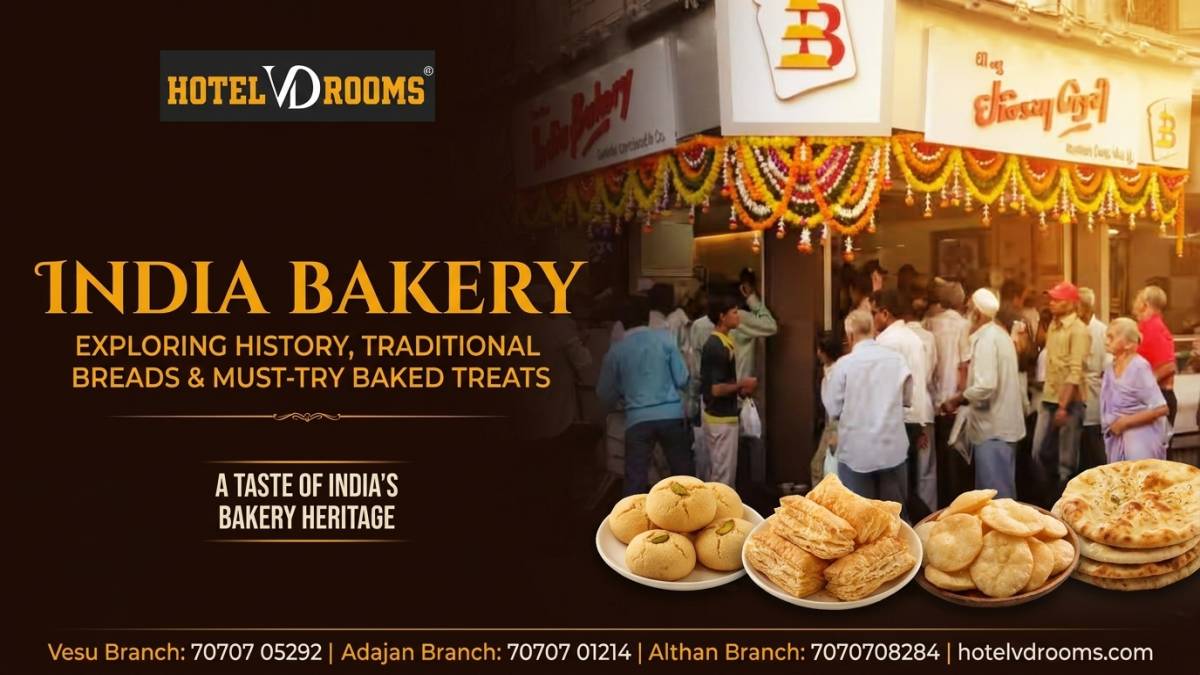
India Bakery: Exploring the History, Famous Bakeries, Traditional Breads & Must-Try Baked Treats
India has a bakery culture that is far richer than modern cakes, pastries and café desserts. From crisp Nankhatai and Khari biscuits to Goan bread, Parsi bakery specialties, rusks, buns and regional sweets, bakeries across the country reflect centuries of cultural exchange and changing food traditions.
The story of an India bakery is closely connected with trade, migration and local adaptation. European baking techniques were introduced in different parts of the country and gradually blended with Indian ingredients, tastes and eating habits. Surat, Goa, Mumbai, Kolkata and several other cities developed distinctive bakery traditions that continue to attract food lovers today.
For travelers visiting Gujarat, Surat is particularly interesting. The city has a historic connection with Parsi bakeries, and Dotivala Bakery is one of its most recognizable names. Recent coverage describes Dotivala Bakery as one of India's oldest bakeries, with its establishment traced to 1863, while historical accounts of the bakery's own family tradition place its roots even earlier.
If you're planning a food trip to Surat, combining bakery exploration with a comfortable stay can make the experience even better. Hotel VD Rooms offers accommodation options in areas such as Vesu and Adajan, giving travelers a convenient base for exploring the city's food, shopping and attractions.
India Bakery: How India's Baking Culture Developed
The history of an India bakery is a story of adaptation. Bread and baked foods existed in India before modern commercial bakeries, but the organized bakery industry developed significantly through interactions with European traders, colonial communities and migrant groups.
Cities with important trading connections became natural locations for new baking traditions. European communities needed familiar bread and baked foods, while Indian bakers gradually learned and adapted those techniques.
India Bakery Traditions Influenced by Trade and Migration
India's historic port cities became meeting points for different culinary traditions. Surat is an excellent example because it was an important trading centre where Dutch, British, Portuguese, Persian, Armenian and other communities interacted. Parsi families played an important role in the development of local bakery traditions.
Over time, European baking methods were combined with Indian preferences. Ingredients, fermentation methods, sweetness levels and textures were modified to suit local consumers.
This created baked foods that were no longer simply European recipes. They became distinctly Indian.
India Bakery Culture and Local Adaptation
One of the most fascinating features of Indian baking is the way recipes change from region to region.
A biscuit may be sweeter in one city, more buttery in another or flavoured with local spices and nuts somewhere else. Traditional bakeries often became neighbourhood institutions where recipes were passed down through generations.
This combination of technique and local creativity is what makes exploring an India bakery such an interesting part of culinary travel.
India Bakery: The Historic Story of Surat's Dotivala Bakery
When discussing traditional Indian bakeries, Surat's Dotivala Bakery deserves special attention.
Dotivala's history is associated with the city's historic Dutch presence and Parsi baking community. Accounts describe Parsi bakers working in bakeries established to serve European communities in Surat. Eventually, Faramji Pestonji Dotivala continued the bakery tradition, developing products that became closely associated with Surat.
India Bakery History Through Dotivala's Traditional Products
The evolution of Dotivala's products demonstrates how Indian bakery culture developed through experimentation.
Historical accounts describe how bread that had lost moisture became popular as a crisp food. The technique of drying bread eventually contributed to the development of the bakery's Irani-style biscuits. Other creations, including Batasa and Nankhatai, became important parts of Surat's bakery identity.
Today, Dotivala continues to offer traditional bakery products along with breads, cakes and confectionery. Its official website lists its Nanpura location on Ardeshir Kotwal Road near Makkai Bridge.
India Bakery Culture and the Famous Nankhatai
Nankhatai is one of the most recognizable traditional Indian biscuits.
The crumbly, rich biscuit has a fascinating history, with accounts connecting its development to the interaction between Dutch baking traditions and Parsi bakers in Surat.
Traditional versions can feature ingredients such as ghee, cardamom and nuts, creating a delicate texture and rich flavour.
For visitors exploring Surat, tasting Nankhatai at a traditional bakery is more than simply trying a snack—it is a way of experiencing part of the city's culinary history.
India Bakery: Traditional Breads You Should Know
India's bakery culture isn't limited to biscuits. Bread is one of the most important categories in traditional and modern bakeries across the country.
Different regions have developed their own preferred breads based on local eating habits and available ingredients.
India Bakery Traditions and Pav
Pav is particularly associated with western India and has become an everyday staple in cities such as Mumbai and Surat.
Soft pav is used in popular dishes including pav bhaji, vada pav and other street-food preparations. The popularity of pav shows how bakery products can become deeply integrated into local food culture.
India Bakery Traditions and Goan Bread
Goa has another fascinating bread culture. Traditional Goan breads form an important part of the region's culinary identity, with bread varieties connected to local communities and historic influences.
The Government of Goa's tourism resources highlight food as an important part of the state's cultural identity and tourism experience.
India Bakery Traditions and Rusk
Rusk is another popular bakery product found throughout India.
Crisp, dry and easy to store, rusk is commonly enjoyed with tea. Its popularity demonstrates the Indian preference for baked foods that are convenient, long-lasting and easy to pair with beverages.
India Bakery: Must-Try Traditional Biscuits and Snacks
If you're exploring an India bakery, biscuits are among the easiest products to start with.
They are convenient to sample, widely available and often represent a bakery's signature style.
India Bakery Favorites: Nankhatai
Nankhatai is a classic choice for anyone interested in traditional Indian biscuits.
Its crumbly texture and rich flavour make it particularly enjoyable with tea or coffee. In Surat, Nankhatai has a strong association with the city's historic Parsi bakery culture.
India Bakery Favorites: Batasa
Surti Batasa is another specialty worth trying.
Historical accounts describe Batasa as a crisp, buttery biscuit associated with the Dotivala family. The traditional version is often linked with flavours such as cumin and a rich shortening or ghee-based texture.
India Bakery Favorites: Khari Biscuits
Khari is a flaky, savoury bakery product that pairs naturally with tea.
Surat's Parsi bakery tradition is particularly associated with varieties of Khari, including puff and flavoured versions.
For travelers who prefer savoury snacks to sweets, Khari is an excellent introduction to traditional bakery culture.
India Bakery: Regional Bakeries Worth Exploring
The best way to understand India's bakery culture is to explore it region by region.
India Bakery Traditions in Gujarat
Gujarat has a strong tea-and-snack culture, and bakeries are an important part of it.
In Surat, traditional Parsi bakeries have helped shape a unique local bakery identity. Nankhatai, Batasa and Khari are particularly associated with the city's food heritage.
India Bakery Traditions in Goa
Goan bakeries are known for traditional breads and regional baked specialties.
The influence of Portuguese culinary history can still be seen in many aspects of Goan food culture, making bakery exploration an interesting activity for visitors.
India Bakery Traditions in Mumbai
Mumbai has a long association with Irani cafés and bakeries. Tea, buns, biscuits, puffs and other baked foods have become part of the city's everyday food culture.
Mumbai's bakery scene demonstrates how immigrant communities and local consumers can create a food culture that eventually becomes synonymous with the city itself.
India Bakery Traditions in Kolkata
Kolkata also has a distinctive bakery culture influenced by its colonial history and diverse communities.
Traditional cakes, breads, biscuits and confectionery remain popular, while modern bakeries continue to introduce new styles.
India Bakery: Why Traditional Bakeries Still Matter
Modern cafés and international bakery chains have transformed the way people buy baked food, but traditional bakeries continue to have an important role.
India Bakery Heritage Passed Through Generations
Traditional bakeries often preserve recipes and techniques that may not be found in modern commercial kitchens.
Family-run establishments can provide a direct connection to local history, with recipes passed from one generation to another.
Dotivala's long-running family connection is a good example of this continuity. Historical accounts identify multiple generations of the Dotivala family with the bakery business.
India Bakery Culture as a Travel Experience
For tourists, visiting a traditional bakery can be as interesting as visiting a monument.
You can learn about local ingredients, observe the types of products people buy and discover snacks that may not be widely available elsewhere.
This is especially valuable in a city such as Surat, where food is an important part of the local identity.
India Bakery: How to Plan a Surat Food and Bakery Trip
If you're visiting Surat to explore traditional food, consider creating a simple food itinerary.
Start with a traditional bakery such as Dotivala, explore local markets, sample Surti snacks and then visit some of the city's heritage and cultural attractions.
India Bakery Food Trail Around Surat
A bakery-focused Surat itinerary can include:
-
Traditional Nankhatai
-
Surti Batasa
-
Khari biscuits
-
Fresh bread and pav
-
Local sweets
-
Surti street food
-
Tea and bakery snacks
Dotivala's official store information lists its historic Nanpura location as well as another location on Varachha Road.
Before visiting, check the bakery's current operating information and product availability.
India Bakery: Where to Stay While Exploring Surat
A food trip becomes much easier when your hotel is comfortable and conveniently located.
Hotel VD Rooms provides multiple room categories and amenities including breakfast, Wi-Fi, king beds and shower facilities.
India Bakery Travelers Staying at Hotel VD Rooms Vesu
Vesu is a modern part of Surat with access to shopping, restaurants, business areas and major roads.
The Hotel VD Rooms Deluxe Room in Vesu offers a practical option for travelers looking for a comfortable room. The official room page lists breakfast, Wi-Fi, a king bed and shower among its amenities.
You can also consider the Hotel VD Rooms Classic Room in Vesu if you prefer a simpler accommodation option.
India Bakery Travelers Staying at Hotel VD Rooms Adajan
Adajan is another convenient area for travelers exploring Surat.
The Hotel VD Rooms Queen Room in Adajan is listed at Nishal Shopping Centre near Galaxy Circle and includes breakfast, Wi-Fi, a king bed and shower facilities.
For travelers wanting additional space, the Hotel VD Rooms Super Deluxe Room in Adajan offers a larger room with a king bed and modern amenities.
India Bakery Travelers Choosing a Comfortable Base
Whether you're visiting Surat for food, business, shopping or sightseeing, choosing accommodation based on your itinerary can save valuable travel time.
Hotel VD Rooms offers different room categories, allowing travelers to choose an option based on their comfort and stay requirements.
India Bakery: Tips for Exploring Traditional Baked Treats
If you are planning your own bakery trail, keep a few things in mind.
India Bakery Shopping Tips for Travelers
Try local specialties first: Every bakery has its own signature products.
Buy smaller quantities initially: This lets you taste several products without wasting food.
Check freshness: For items such as bread and soft cakes, freshness matters.
Ask about traditional specialties: Staff can often recommend products that represent the bakery's history.
Carry bakery products carefully: Biscuits and delicate baked goods can break during travel.
Check current availability: Traditional products may sell out during busy periods.
India Bakery: The Future of India's Traditional Baking Culture
India's bakery industry continues to evolve. Modern cafés, premium patisseries and artisanal bakeries are introducing new techniques, while traditional bakeries continue to preserve familiar flavours.
The two styles don't necessarily have to compete. Modern bakeries can introduce consumers to new products, while historic establishments preserve recipes and food memories that connect today's generation with the past.
India Bakery Traditions Meet Modern Hospitality
This combination of old and new is particularly visible in cities like Surat.
You can spend the morning exploring a historic bakery, enjoy traditional Nankhatai or Batasa, visit a heritage attraction and return to a modern, comfortable hotel in the evening.
That balance makes Surat an appealing destination for travelers who want both cultural experiences and contemporary convenience.
India Bakery: Final Thoughts
The story of an India bakery is ultimately a story about people, migration, experimentation and adaptation.
From traditional breads to Nankhatai, Batasa, Khari and rusk, India's baked foods reflect the country's diverse cultural history. Surat's Parsi bakery traditions are an especially fascinating example of how international influences were adapted into local food culture.
For food lovers visiting Gujarat, exploring Dotivala Bakery in Surat can provide a memorable taste of this heritage. Its association with traditional products such as Nankhatai, Batasa and Khari makes it an excellent stop on a Surat food itinerary.
After your bakery exploration, you can return to a comfortable stay at Hotel VD Rooms, with room options available in Vesu and Adajan and a range of amenities designed for modern travelers.
So, the next time you search for an India bakery, don't just look for the nearest place selling cakes and pastries. Look for the stories behind the ovens, the recipes passed through generations and the traditional treats that tell you something about the city you're visiting.