

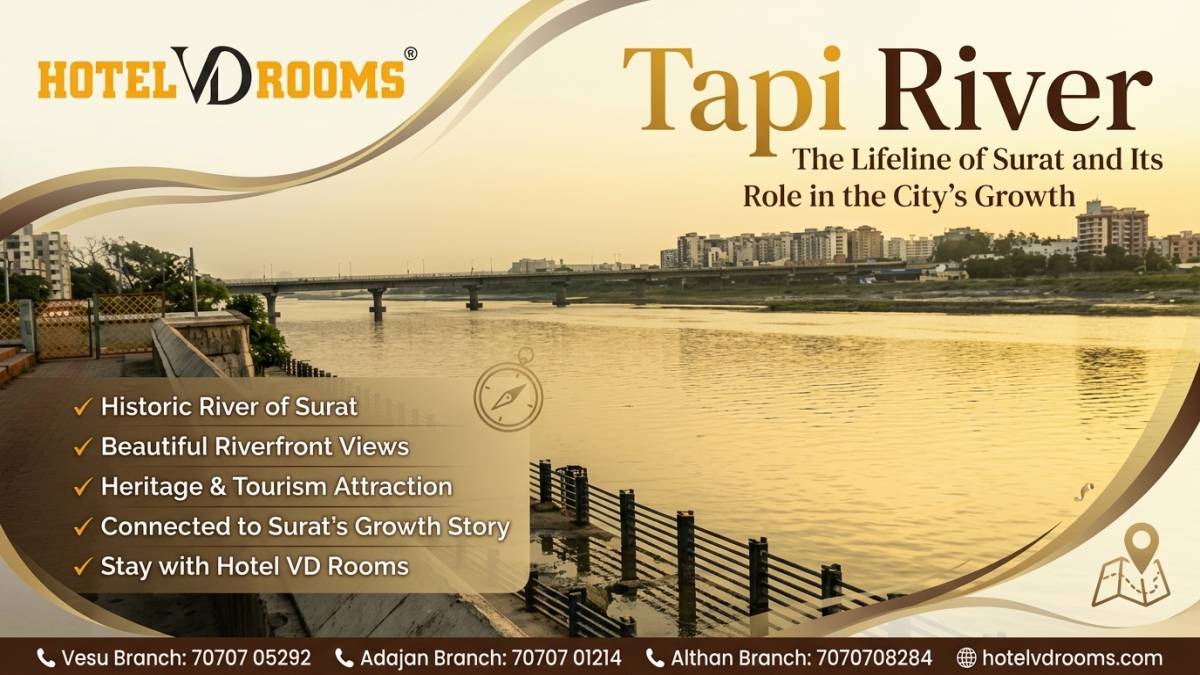
Tapi River: The Lifeline of Surat and Its Role in the City's Growth
The Tapi River is one of the most important rivers in western India and has played a vital role in shaping the history, economy, culture, and development of Surat. Flowing through the heart of the city, the river has been a source of livelihood, transportation, trade, and urban growth for centuries.
Often referred to as the lifeline of Surat, the Tapi River has contributed significantly to the city's transformation from a historic trading port into one of India's fastest-growing commercial hubs. Today, the river continues to influence Surat's infrastructure, tourism, riverfront development, and environmental sustainability.
Whether you're a tourist exploring Surat, a history enthusiast, or a business traveler visiting the city, understanding the significance of the Tapi River offers valuable insights into Surat's remarkable journey.
Visitors planning a trip to Surat can enjoy comfortable accommodation in Deluxe Rooms, Queen Rooms, King Rooms, Super Deluxe Rooms, and Suite Rooms at https://www.hotelvdrooms.com while exploring the city's famous attractions located near the river.
Tapi River: Understanding Its Origin and Course
The Tapi River is one of India's major west-flowing rivers and is considered one of the most significant rivers in central and western India.
Tapi River Origin in Madhya Pradesh
The Tapi River originates near Multai in the Betul district of Madhya Pradesh. From there, it travels westward through multiple states before emptying into the Arabian Sea.
The river flows through:
-
Madhya Pradesh
-
Maharashtra
-
Gujarat
Covering a distance of approximately 724 kilometers, the Tapi River is among the major river systems of western India. Information about the river basin and its significance can be found through the Central Water Commission at https://cwc.gov.in.
Tapi River Reaches the Arabian Sea Through Surat
One of the most important sections of the river's journey occurs in Gujarat, where it passes through Surat before merging into the Arabian Sea.
This strategic location has historically made Surat an important maritime and commercial center.
Tapi River: The Historical Foundation of Surat's Growth
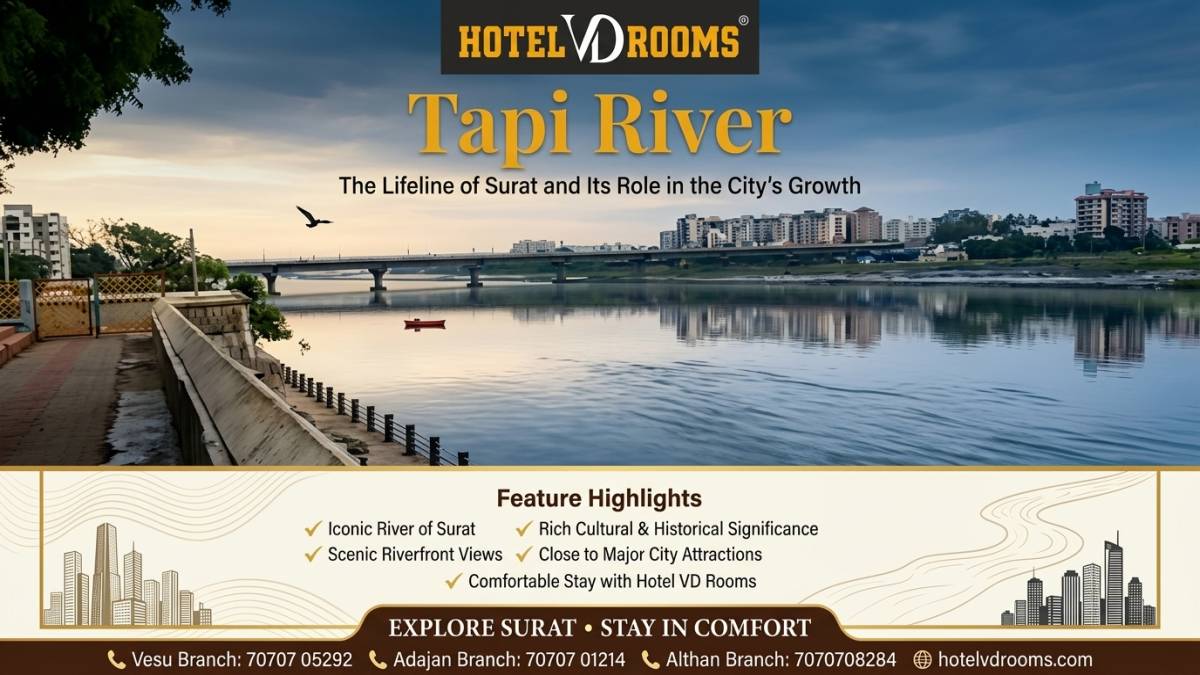
The relationship between Surat and the Tapi River dates back hundreds of years.
Tapi River Helped Establish Surat as a Trading Hub
During the Mughal era, Surat emerged as one of India's most important port cities. The proximity of the Tapi River allowed ships to transport goods between inland regions and international markets.
Merchants from Europe, the Middle East, Africa, and Asia visited Surat to trade textiles, spices, precious stones, and other valuable commodities.
The river played a critical role in supporting these commercial activities and contributed significantly to Surat's prosperity.
Tapi River Supported Maritime Trade and Commerce
Before modern transportation systems developed, rivers served as essential trade routes.
The Tapi River enabled:
-
Movement of goods
-
Trade expansion
-
Port activities
-
Economic development
-
International commerce
The success of Surat as a global trading center was closely linked to the accessibility provided by the river.
Historical information about Surat's trading heritage can be explored through Gujarat Tourism at https://www.gujarattourism.com.
Tapi River: Economic Importance for Modern Surat
Even today, the Tapi River remains an important asset for the city's economy.
Tapi River Supports Industrial Development
Surat is known worldwide for its:
-
Textile industry
-
Diamond industry
-
Manufacturing sector
-
Infrastructure development
Water resources from the Tapi River contribute to various industrial and urban requirements that support the city's economic activities.
As Surat continues to expand, the river remains a key component of regional development.
Tapi River Contributes to Urban Infrastructure
The river influences several aspects of urban planning including:
-
Water supply
-
Drainage systems
-
Riverfront development
-
Transportation infrastructure
-
Environmental management
Its presence has helped shape many of Surat's modern infrastructure projects.
Tapi River: Environmental Significance for the City
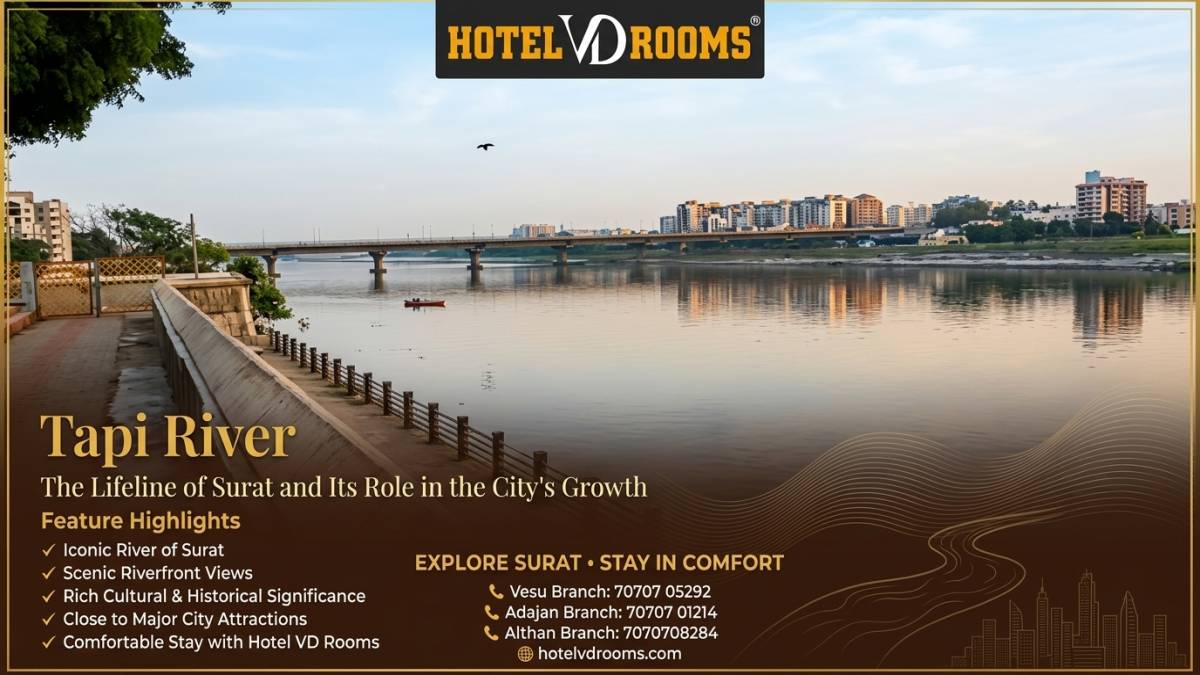
The Tapi River also plays a major environmental role.
Tapi River Supports Local Ecosystems
The river sustains various forms of biodiversity and ecological systems throughout its basin.
Important environmental benefits include:
-
Habitat for aquatic species
-
Support for vegetation
-
Groundwater recharge
-
Climate regulation
-
Ecological balance
Protecting the river remains an important priority for sustainable urban development.
Tapi River Influences Surat's Climate
Large water bodies often affect local weather patterns.
The Tapi River contributes to:
-
Temperature moderation
-
Humidity regulation
-
Seasonal ecological stability
Its presence enhances the environmental health of the region.
Tapi River: The Rise of Riverfront Development
One of the most exciting developments associated with the river is Surat's riverfront transformation.
Tapi River Is Central to Surat Riverfront Projects
Inspired by successful riverfront developments across India, Surat has initiated projects designed to improve public access to the river while enhancing urban infrastructure.
The Tapi Riverfront Development Project aims to create:
-
Public recreational spaces
-
Walking tracks
-
Green zones
-
Tourism attractions
-
Improved waterfront infrastructure
More information about the project can be found at https://tapiriverfront.com.
Tapi River Riverfront Areas Boost Tourism
Riverfront development creates opportunities for:
-
Family outings
-
Evening walks
-
Photography
-
Cultural events
-
Community activities
These projects are expected to strengthen Surat's appeal as a tourism destination.
Tapi River: Popular Attractions Located Near the River
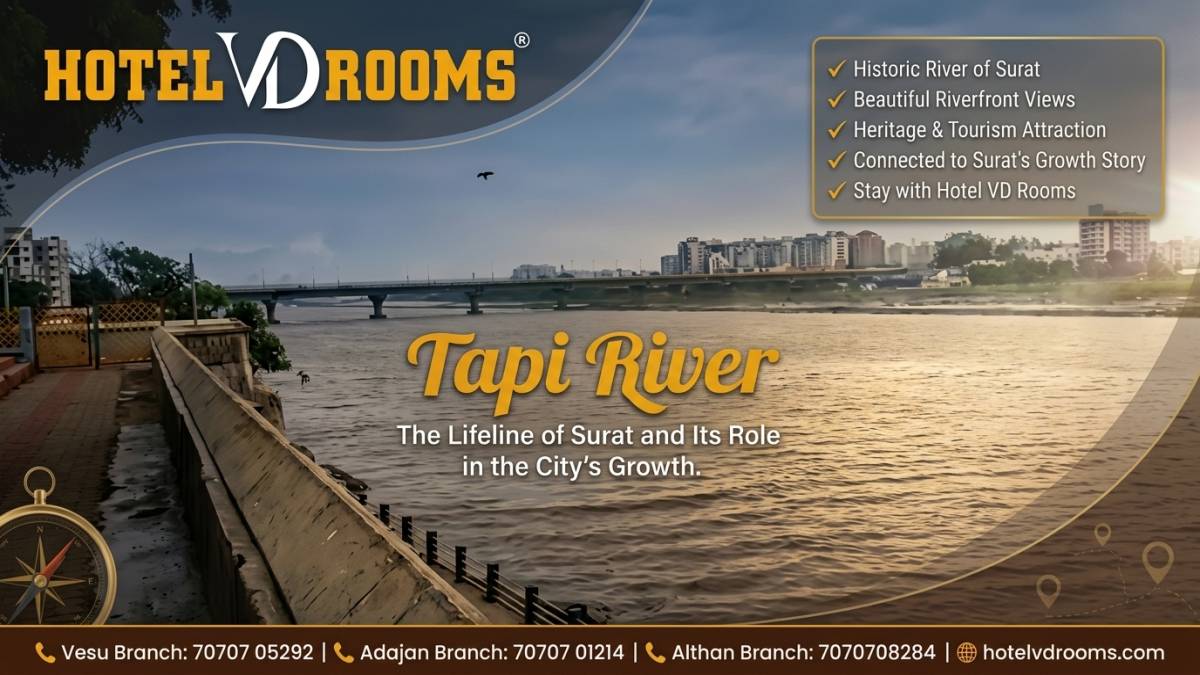
Many of Surat's most famous attractions are situated near the Tapi River.
Tapi River and Surat Fort
One of the city's most important historical landmarks is Surat Fort.
Built in the 16th century, the fort was strategically positioned near the river to protect Surat from foreign invasions and safeguard trade routes.
Visitors interested in heritage tourism often include both Surat Fort and the riverfront in their itinerary.
Learn more about Surat Fort through:
https://www.suratmunicipal.gov.in/TheCity/SuratCastle
Tapi River and Dutch Garden
The historic Dutch Garden is another attraction located near the river.
Known for its colonial architecture and peaceful atmosphere, it remains a popular destination among history enthusiasts and photographers.
Tapi River and Gopi Talav
Gopi Talav is one of Surat's most visited recreational attractions and is often included in sightseeing tours alongside riverfront destinations.
Families and tourists enjoy spending time in this beautifully developed area.
Tapi River: Why Tourists Love Visiting the Riverfront
The Tapi River offers a unique experience that combines history, nature, and urban development.
Tapi River Provides Excellent Photography Opportunities
Visitors can capture:
-
Sunrise views
-
Sunset scenery
-
Riverfront landscapes
-
Heritage landmarks
-
Modern city skylines
The combination of natural beauty and urban architecture creates excellent visual appeal.
Tapi River Offers Relaxation Amid Urban Life
In a rapidly growing city like Surat, the river provides a refreshing escape from busy commercial districts.
Residents and visitors alike appreciate the peaceful atmosphere found near the waterfront.
Tapi River: Where to Stay While Exploring Surat

A comfortable stay enhances any travel experience.
Tapi River Visitors Need Convenient Accommodation
Travelers exploring attractions near the river often prefer accommodation that offers:
-
Comfortable rooms
-
Easy city access
-
Clean environment
-
Modern amenities
-
Affordable pricing
Hotel VD Rooms offers a variety of accommodation options suitable for business travelers, families, couples, and tourists.
Guests can explore Deluxe Rooms, Super Deluxe Rooms, Queen Rooms, King Rooms, and Suite Rooms at https://www.hotelvdrooms.com.
Tapi River Travelers Benefit from Strategic Hotel Locations
Conveniently located accommodations allow visitors to access:
-
Surat Fort
-
Gopi Talav
-
Dutch Garden
-
Textile Markets
-
Business districts
This makes Hotel VD Rooms an excellent choice for travelers looking to experience the best of Surat.
Tapi River: The Future of Surat's Growth and Development
The Tapi River has shaped Surat's past, supports its present, and will continue to influence its future.
From enabling maritime trade centuries ago to supporting modern infrastructure and riverfront development, the river remains deeply connected to the city's identity. Its economic, environmental, historical, and cultural significance makes it one of Surat's most valuable natural assets.
As Surat continues to grow into a global business and tourism destination, the Tapi River will remain at the center of the city's development story. For visitors exploring Surat's heritage, attractions, and riverfront experiences, the river offers a fascinating glimpse into the forces that helped build one of Gujarat's most dynamic cities.
A trip to Surat becomes even more memorable when combined with comfortable accommodation at Hotel VD Rooms, allowing travelers to enjoy both the city's modern conveniences and its historic connection to the magnificent Tapi River.